The Memory Wave Review 2026: Does the Gamma Audio Actually Improve Memory?

A few years ago, forgetting things felt harmless.
You’d misplace your keys.
Open a tab and forget why.
Lose track of names you knew you knew.
Most people brushed it off as stress.
But sometime between endless notifications, broken sleep, and days spent staring at screens, that “harmless forgetfulness” started feeling… heavier. Conversations required more effort. Focus slipped faster. Mental energy didn’t last the way it used to.
That’s usually the moment people start searching.
Not for medication.
Not for complicated brain training.
Just for something simple that might help their mind feel clear again.
That’s how many readers arrive at The Memory Wave.
It’s often mentioned as a short, audio-based program that claims to support memory and focus through sound — no supplements, no exercises, no lifestyle overhaul. Just headphones and a few minutes a day.
Before deciding whether claims like that are realistic, it’s worth slowing down and looking at what The Memory Wave actually is, how it’s supposed to work, what research does (and doesn’t) support it, and what real users have experienced over time.
That’s exactly what this review covers.
Key Takeaways (Quick Summary)
The Memory Wave is a 17-minute gamma audio program focused on memory and focus support
It uses neuro-acoustic stimulation and brainwave entrainment techniques
Claims are centered on gamma activity and BDNF-related plasticity
Results vary and typically require consistent daily use for 2–4 weeks
Best tested under the official vendor’s refund policy to reduce risk
Why Memory Support Tools Are Trending in 2025–2026
Concerns around memory and focus are no longer limited to older adults. People in their 30s, 40s, and 50s increasingly report brain fog, forgetfulness, and reduced attention span.
Several factors contribute to this trend:
Prolonged screen exposure and digital multitasking
Chronic stress and poor sleep quality
Irregular routines and limited cognitive recovery
Research consistently shows that stress and sleep disruption negatively affect brain processes linked to learning and recall. In particular, lower levels of brain-derived neurotrophic factor (BDNF) are associated with reduced neuroplasticity and memory efficiency.
As a result, interest has shifted toward non-drug interventions that are low-risk, repeatable, and easy to integrate into daily life. Audio-based approaches fit this demand well.
What Is The Memory Wave?
The Memory Wave is a digital audio program intended for daily use. The core product consists of a single audio track played through stereo headphones in a quiet environment.
Program Format
One audio session per day
Approximately 17 minutes per session
Passive listening (no active tasks required)
What’s Included
Main gamma audio file
Quick-start usage guide
Occasional bonus materials depending on the offer (short booster tracks or lifestyle tips)
The product is delivered digitally and accessed immediately after purchase.
How The Memory Wave Claims to Work
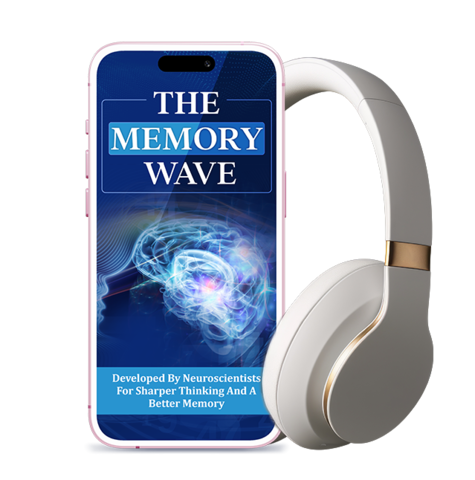
The program is built around gamma-frequency brainwave entrainment, typically associated with activity around 40 Hz.
Gamma Brainwaves (Simplified)
Gamma activity is commonly observed during tasks involving:
Working memory
Information integration
Focused mental effort
The Memory Wave audio uses rhythmic sound patterns designed to encourage the brain to align with these frequencies through a process known as neural entrainment.
Audio Techniques Used
Binaural beats: Slightly different tones delivered to each ear, creating a perceived frequency
Amplitude modulation: Controlled changes in volume to maintain comfort and reduce fatigue
Role of BDNF
BDNF supports neuron growth and synaptic plasticity. While audio alone does not directly increase BDNF, gamma activity and healthy brain rhythms are often discussed in the context of environments that support learning and adaptation.
Important clarification:
The Memory Wave is positioned as a support tool, not a medical treatment or cognitive cure.
How It Compares to Other Cognitive Tools
Compared to Supplements and Nootropics
No ingestion or chemical interaction
No dependency concerns
One-time cost rather than recurring purchases
Compared to Meditation and Brain-Training Apps
Faster onboarding (no learning curve)
Passive use instead of active exercises
No ongoing subscriptions
Session Length Comparison
Ultra-short audio tools (seconds long) prioritize convenience
Longer programs (15–20 minutes) aim for sustained entrainment
The Memory Wave sits in the middle, offering short but structured daily sessions.
Credibility and Evidence Review

When evaluating any brain-focused product, it’s important to separate mechanism plausibility from outcome certainty.
What Exists
Audio entrainment research shows temporary changes in brainwave coherence
Small EEG-based studies indicate measurable activity shifts during exposure
User surveys report perceived improvements in focus and clarity
What’s Missing
Large-scale, long-term clinical trials
Standardized memory performance outcomes across populations
Responsible vendors acknowledge these limits and frame the program as a wellness aid rather than a therapeutic intervention.
User-Reported Results (2024–2026)
Based on aggregated feedback patterns:
Commonly Reported Benefits
Improved short-term recall
Reduced mental fatigue
Better focus during work or study
Typical Timeline
Week 1–2: subtle clarity or attention changes
Week 3–4: more noticeable recall and focus improvements for some users
Beyond: effects stabilize with continued routine use
Lifestyle factors such as sleep quality, stress levels, and consistency strongly influence outcomes.
No cognitive tool works for everyone. The most frequent issues reported include:
Slow or minimal results for some users
Unrealistic expectations of instant improvement
Poor experiences caused by counterfeit or low-quality audio files
Buying from unauthorized sources is a common cause of negative feedback due to degraded audio quality.
How to Use The Memory Wave for Best Results
Recommended Routine
Use once daily at the same time
Sit or lie comfortably in a quiet space
Use quality stereo headphones
Avoid multitasking during sessions
Supporting Habits
Regular sleep schedule
Balanced nutrition
Light physical activity
Stress management
Tracking simple markers like focus quality or recall incidents over 2–4 weeks helps evaluate effectiveness objectively.
Pros and Cons Summary
Pros
Non-invasive and drug-free
Time-efficient daily sessions
Simple, repeatable format
One-time purchase with refund option
Cons
Results are not guaranteed
Requires consistency over weeks
Not suitable for certain medical conditions without professional advice
Safety, Authenticity, and Refund Policy
Most users tolerate audio entrainment well. However:
Individuals with epilepsy or neurological sensitivity should consult a professional
Start at moderate volume
Discontinue use if discomfort occurs
To avoid counterfeits:
Purchase only from the official website
Ensure secure checkout and clear refund terms
Legitimate offers typically include a 60–90 day money-back guarantee
Pricing and Availability
Pricing usually falls in the range typical for digital audio programs, with:
One-time payment
Lifetime access
No subscription fees
Exact pricing and bonuses may vary by promotion.
Final Verdict: Is The Memory Wave Worth Trying?
The Memory Wave is best viewed as a low-risk cognitive support tool, not a guaranteed solution. It may help some users improve focus and recall when used consistently and paired with healthy routines.
For those interested in audio-based, non-drug approaches to mental performance, it is reasonable to evaluate under the available refund window.
FAQs
What is The Memory Wave, and how does the gamma audio claim to work?
The Memory Wave is a digital audio program. It uses sound frequencies and neural entrainment to boost brain activity. Listening for about 17 minutes a day is suggested to improve focus and memory.
Does the gamma audio really work?
Yes, research shows it can change brain rhythms and improve focus. User feedback from 2024–2026 also supports its effectiveness. But results can vary, and more research is needed.
Who is most likely to benefit from The Memory Wave?
Students, professionals, and older adults often see the biggest benefits. It’s less effective for those with serious medical issues or expecting quick fixes.
How long should I listen before judging whether it helps me?
Listen daily for at least 2–4 weeks. Many notice small changes in 1–2 weeks. Use a 60–90 day money-back guarantee to test it fully.
How should I use The Memory Wave for best results?
Listen in quiet, comfortable surroundings with high-quality headphones. Pair it with good sleep, exercise, and a balanced diet. Keep a daily log to track your progress.
Are there any safety concerns or side effects?
It’s safe for most adults but can cause discomfort in rare cases. People with epilepsy or serious health issues should consult a doctor first.
What evidence supports the program’s claims about BDNF and memory?
Neuroscience backs the role of BDNF in memory. Studies show audio can alter brain rhythms and improve cognition. But more research is needed for solid proof.
How does The Memory Wave compare to nootropics, meditation, or brain-training apps?
It’s non-ingestible and avoids side effects. It’s faster to start than meditation and cheaper than apps. Effectiveness varies by individual.
What are the main pros and cons?
Pros include being non-invasive and backed by science. Cons include not working for everyone and the risk of counterfeits.
How much does The Memory Wave cost, and what’s included?
Prices range from $39 to $59 for a one-time purchase. You get the core audio, a guide, and sometimes bonuses.
Where should I buy to avoid counterfeits and protect my purchase?
Buy only from the official website. Look for secure checkout and clear refund policies. Avoid third-party listings to avoid counterfeits.
What refund or guarantee should I expect?
Reliable vendors offer 60–90 day money-back guarantees. Follow their refund procedure if not satisfied. This lowers trial risk.
How do I know the developer’s credentials and lab claims are real?
Check the developer’s bio and lab reports on the vendor site. Look for peer-reviewed citations and transparent methodology. Responsible vendors publish test data or references to studies.
What kinds of user results have been reported between 2024 and 2026?
Users report improved recall, focus, and mental energy. Many see progress in 2–4 weeks. Results vary, and some see little change.
Are there common complaints or reasons people say it didn’t work?
Common issues include impatience, expecting quick fixes, and underlying medical issues. Managing expectations and pairing with lifestyle changes helps.
Can audio entrainment replace medical treatment for cognitive disorders?
No. It’s a wellness tool, not a medical treatment. Those with serious cognitive decline should seek medical evaluation.
Any tips to get the best fidelity and entrainment effect?
Use high-quality headphones and the authentic file from the official site. Listen in a quiet, comfortable spot. Avoid altered files for best results.
Should I combine The Memory Wave with other lifestyle changes?
Yes. Best results come with sleep, exercise, a balanced diet, and stress management. These support BDNF and neuroplasticity.
If I don’t notice improvement, what should I do?
Confirm using authentic files and following the routine for 2–4 weeks. Track progress and use the vendor’s money-back guarantee if not satisfied. Also, address sleep, nutrition, and stress factors.
Final Thoughts
Then The Memory Wave deserves thoughtful consideration.
Not because of bold promises —
But because it aligns with where non-drug cognitive science is quietly heading.
Here’s the question most people never pause to ask:
Have you ever supported the way your brain enters focus — instead of constantly forcing it?
The Memory Wave isn’t asking you to train harder, consume stimulants, or push through mental fatigue.
It’s simply asking you to observe what happens when your brain is given a consistent, calm signal — rather than being overstimulated, rushed, or overloaded.
Give it a fair trial.
Use it as intended.
Pay attention to how your focus, clarity, and recall respond over time.
If you don’t feel mentally steadier or more present, you move on.
That’s a reasonable exchange.
— Reviewed by Amey 🙂
Affiliate Disclosure –This article contains affiliate links. I may earn a commission at no additional cost to you.
Disclaimer – This content is for educational purposes only and does not guarantee financial results.